A1. users comment on the content first; if the content is not relevant, then they don’t care about any other aspect of the design 用戶首先評論內容; 如果內容不相關,那麼他們不關心設計的任何其他方面
A2. when they arrive on a page, users ignore navigation bars and other global design elements: instead they look only at the content area of the page 當他們到達一個頁面時,用戶會忽略導航欄和其他全局設計元素:相反,他們只查看頁面的內容區域
A3. users don’t understand where they are in a website’s information architecture 用戶不明白他們在網站的信息架構中的位置
A4. users are extremely goal-driven and look only for the one thing they have in mind — they don’t spend much time on promotions for anything else 用戶是極其目標驅動的,並且只考慮他們想到的一件事 — 他們不會花太多時間在其他任何促銷活動上
A5. in pursuit of their goal, users often rely on search as their main hunting strategy 為了追求自己的目標,用戶經常依靠搜索作為他們的主要狩獵策略
A6. users rarely look at logos, mission statements, slogans, or any other elements they consider fluff (in particular, they ignore advertising and anything that looks like an ad) 用戶很少看標識,使命宣言,標語或他們認為絨毛的任何其他元素(特別是,他們忽略廣告和任何看起來像廣告的東西)
A7. if a page does not appear relevant to the user’s current goals, then the user will ruthlessly click the Back button after two to three seconds 如果一個頁面與用戶的當前目標不相關,那麼用戶將在兩到三秒後無情地點擊後退按鈕
A8. if users don’t understand a certain design element, they don’t spend time learning it — instead, they ignore it and continue the hunt for their own goal 如果用戶不理解某個設計元素,他們不會花時間學習它 — 相反,他們忽略它並繼續尋找自己的目標
再來 Jakob 提出了設計原則(僅節錄部分):
Generic Links
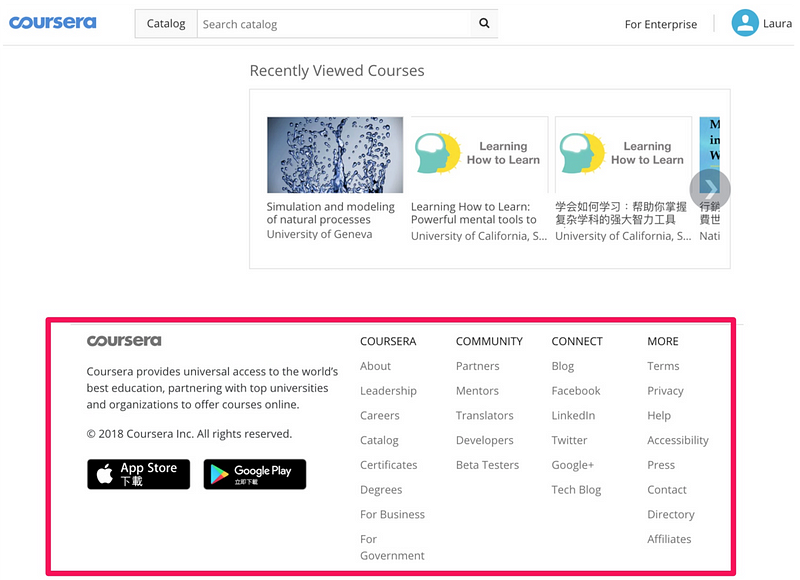
B1. Restrict linking to basic features (say, search, copyright, and a few more), the home page, and the main page for the current section. 縮減鏈接到剩下基本功能(如搜索,版權等),主頁和當前部分的主頁面。
B2. Less is more : having a small number of standard links on every page makes it more likely that users will notice those links they do need. 少即是多 :每個頁面上都有少量的標準鏈接,使用戶更有可能注意到他們需要的鏈接。
Structural Navigation
B3. Do not link to all sections of the site from all pages. What is the probability that a user will go from looking at hairdryers to looking at grunge music? … Why not just go back to the home page … 不要鏈接到所有頁面的網站的所有部分。用戶從看吹風機看看垃圾音樂的可能性有多大?(筆者註:子頁面幾乎不會有互相連結的需要)… 為什麼不回到主頁
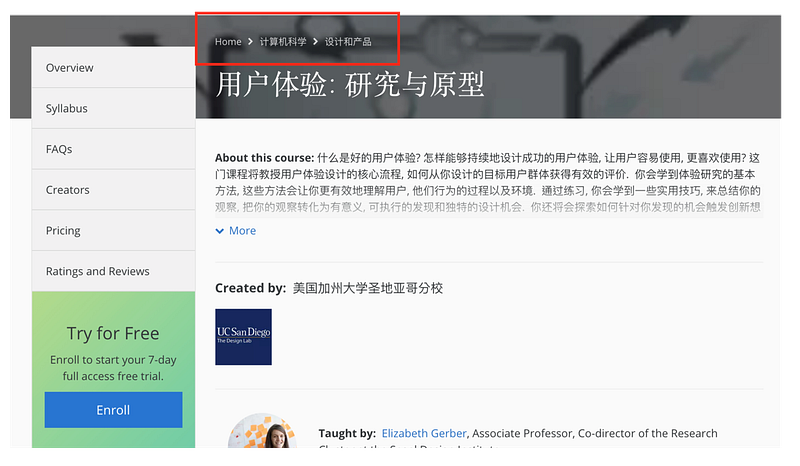
B4. … provide links to all levels of the hierarchy above the current location. … Without structural links, pages become orphans that are not contextualized. And since users often arrive at pages through search or other means that bypass the higher-level navigation pages, it is necessary to provide a path back to these higher levels. 提供指向當前位置上方所有級別的鏈接。… 沒有結構鏈接,頁面就會變成沒有語境化的孤兒 。而且,由於用戶通常通過搜索或其他方式繞過較高級別的導航頁面到達頁面,因此有必要提供返回到這些更高級別的路徑。
Local Navigation
B5. Local links to related content are also very useful. 與相關內容的本地鏈接也非常有用。
Structure Can Help
B6. Most sites have miserable information architectures that mirror the way the company internally thinks about the content and not the way users think about the content. 大多數網站都有悲慘的信息架構 ,這些架構反映了公司內部對內容的看法,而不是用戶對內容的看法。(沒人願意看的網站導覽)
B7. Users are so impatient on the Web that they don’t take time to learn about any individual website and its structure — instead, they proceed to the next site. 用戶對Web非常沒耐心,以至於他們沒有時間了解任何單獨的網站及其結構 — 而是轉向下一個網站。









評論